The Green Dream

Building green, great and gorgeous citie

Building green, great and gorgeous cities

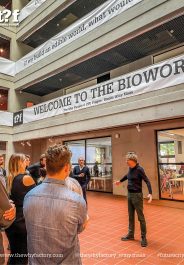
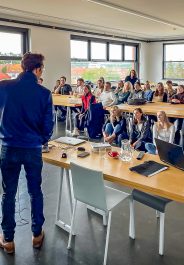
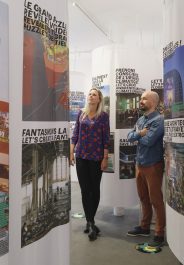
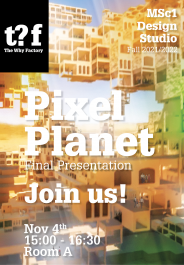
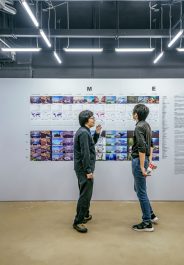
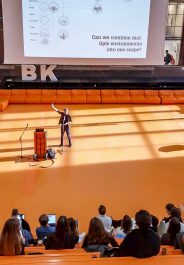
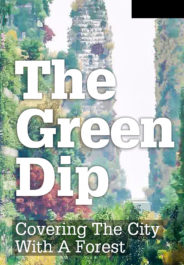
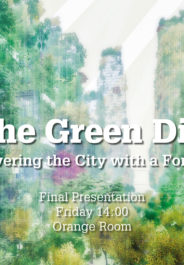
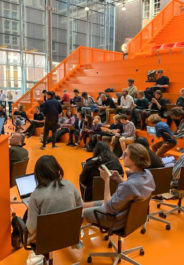
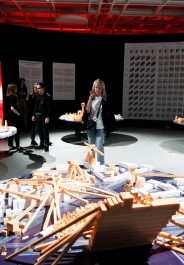
In a semester-long MSc studio at Delft University of Technology, T?F looked beyond doom scenarios, guilt management and small scale approaches. Instead T?F explored the challenges of green architecture and urban design to harness its power.

There is confusion about what ‘green’ means for design. Ole Bauman, the director of the Netherlands architecture institute described the situation, “We are keen to participate, but we don’t know what it [sustainability] means.” Green projects are still disconnected efforts, which do not reach the scale of interventions needed. Green is fashionable, yet its design potentials are unexplored.

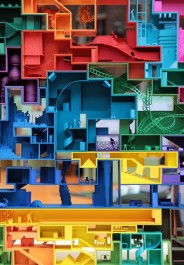
The Master studio questioned what is ‘green’ today and together with experts elaborated what it could be. It recognized that green buildings alone will not make a city green, therefore considering the city as a collective fabric was crucial. Is a green city even possible? The projects resulting from students’ investigations challenge architectural conventions and look into potentials of new green architecture and urbanism. 

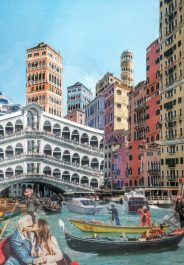
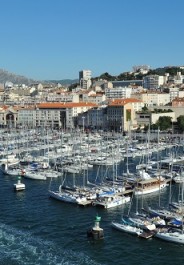
‘Hanging gardens of Barcelona’ by Magnus Svensson and Nicola Placella illustrates the vast scale of intervention required to achieve a small percentage of self-reliance in food production within the city borders of Barcelona. ‘Wind City’ by Marcello Fantuz and Andreas Kalapakci proposes an alternative to inefficient distributed energy networks by incorporating wind turbines into the city. While improving the efficiency of the city - a new urban form emerges. Tanya Martinez Gonzales and Carlo Maria Morsiani looked at experimental and unexpected tools from biotechnology, and their applications in the city. They designed a ‘Fluocity’ using bacteria that emits bright fluorescent light in moving water. This bacteria is implemented to design lighting elements at different scales: from entire canals to window elements. 

These projects, along with others, offer contextual, large-scale, fantastic and quantifiable architectural and urban visions. 


Hanging gardens of Barcelona

Self-reliant cities

The global food industry is the subject of our research. What impact do our eating habits have and what is our role as urban planners in this context?

The food industry is one of needless transportation and waste. We transport food from every corner of the world and while we produce more than we can consume, we're still hungry. In our global footprint the food industry is one of the largest industries, dwarfing other industries such as energy production and the building industry. The biggest offender within the food industry is without a doubt the meat sector. Ethical issues aside, the devastating environmental effects of the livestock industry and the sheer amount of land used make us question our western eating habits and look for an alternative. Project challenges the global food industry and explore the possibilities and impossibilities of a localized food chain. Land use and transportation is minimized in the self-sustaining cities of the totalitarian vegan order.

The design project illustrates the massive scale of intervention required to achieve even a small percentage of self-reliancy in food production in Barcelona. To be efficient green must go large scale.

Project:
Nicola Placella
Magnus Svensson

Global food transportation

Eye level view of Hanging Gardens Barcelona

Aerial level view of Hanging Gardens Barcelona


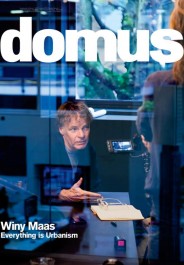
Prof Winy Maas
Tutors: Ulf Hackauf, Pirjo Haikola with Alexander Sverdlov and Peter Mensinga
Collaborators: Jaap Wiedenhoff (Arup), John Thackara, Paul van Bergen (DGMR)
Students: Guner Arici, Sonia Assouly, Yan Bai, Didier Callot, Xander Cornelis, Marcello Fantuz, Ryan Forster, Sebastiano Giannesini, Andreas Kalpakci, Sonya Kohut, Caroly Leung, Liping Lin, Wan-Yu liu, Pauline Marcombe, Tanya Martinez Gonzales, Piero Medici, Carlomaria Morsiani, Miquel, Roldan Noto, Nicola Placella, Tomasz Puszcz, Magnus Svensson, Gürhan Uçaroglu, Adi Utama, Victor Vila Garcia, Jie Xiong